Passionate developer currently studying Machine Learning & AI at university.
I love to bring ideas to life with logic, crafting games and am very interested in AI.
moritzbauerlein@gmail.com
Game Developer
AI Student
About Me
My Works
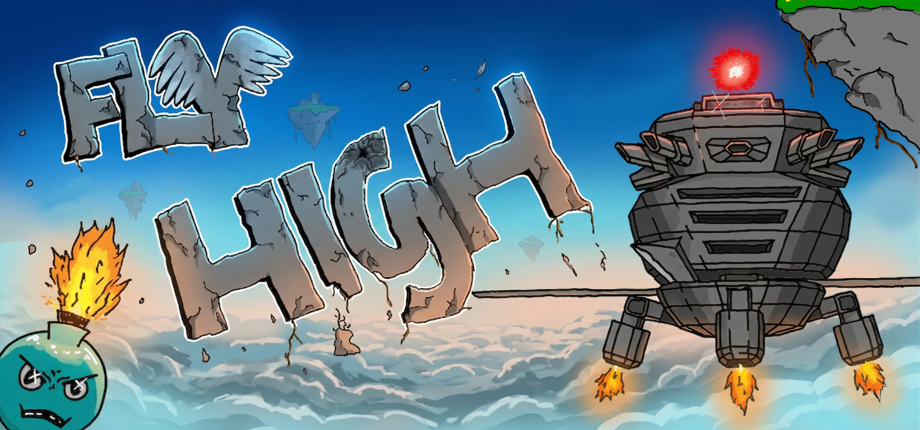
Grappling Game
A fun 3D platformer with unique grappling mechanics. Collect items, dodge obstacles, and reach the top of the sky!
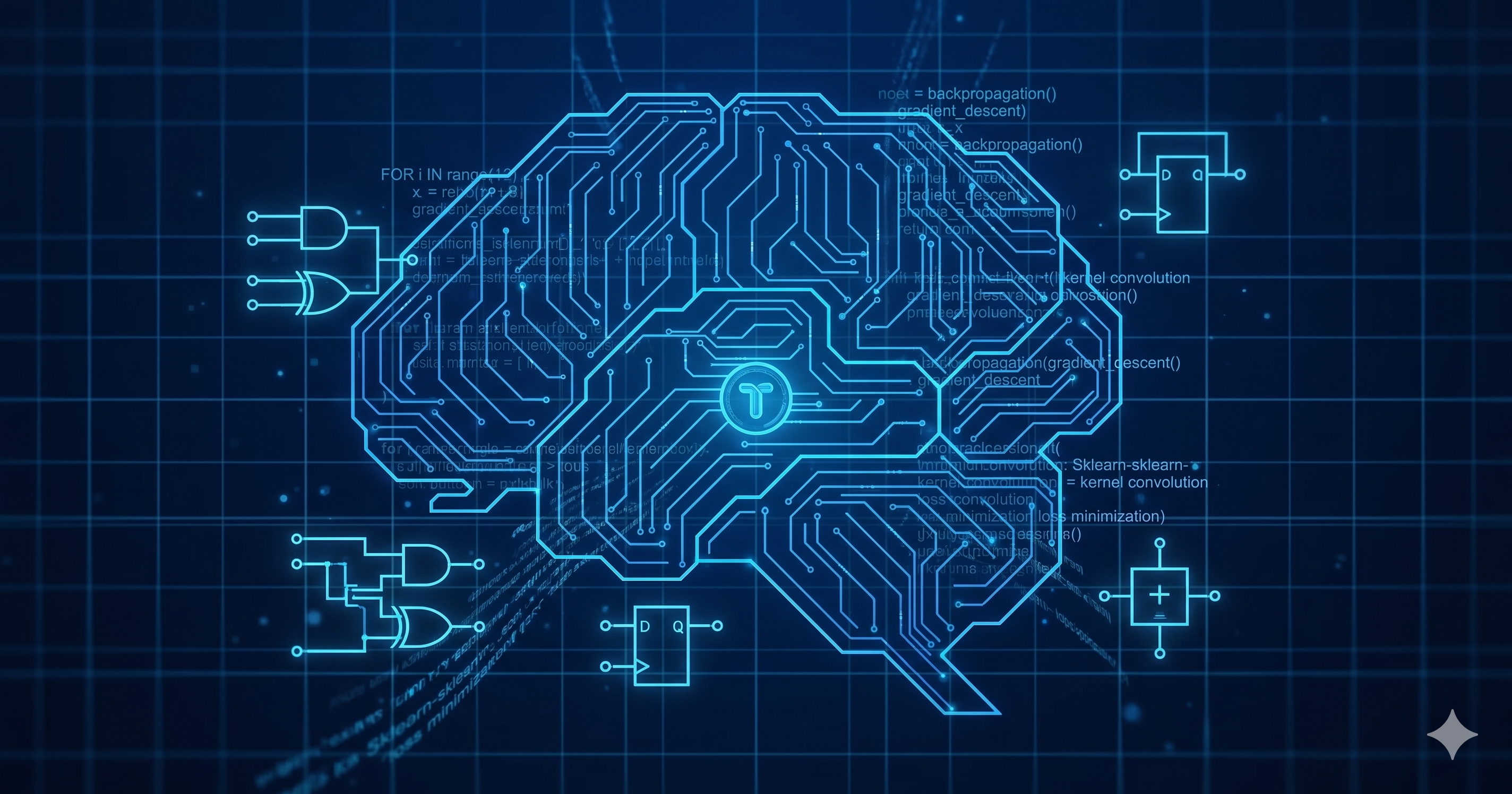
AI & Machine Learning
Deep dive into backpropagation, neural networks, supervised & unsupervised learning algorithms.
The core idea of "Grappling Game" is a high-speed, vertical race where players grapple upward until reaching the pinnacle of the sky. The environment consists of a massive obstacle course of floating islands, each presenting unique environmental hazards and bounding properties that force players to constantly adapt their momentum and playstyles.
Grappling Mechanics: Authoritative Momentum
The objective is to navigate the abyss using the core grappling mechanic, testing the player's momentum management, skill, and precision. Players can collect items and power-ups that dynamically tweak physics constants in real-time—such as instantly extending the maximum tension length of the grappling hook or massively boosting velocity.
Architectural Pillar: Client-Side Prediction & Server Reconciliation
Programming a physics-based grappling hook is complex; making it feel responsive over the internet is a massive technical hurdle. To solve network latency (ping), the grappling system utilizes advanced Client-Side Prediction. When a player fires, their local client immediately calculates the vector math, tension, and pull magnitude to simulate a satisfying swing arc with zero input lag. Simultaneously, the server runs identical physics simulations as the absolute authority, silently validating the movement and replicating it to other clients. This dual-layered architecture ensures buttery-smooth traversal for the local player while completely preventing speed-hacking or positional desyncs.
The Ecosystem: Dynamic Threats & Competitive Backend
Along the high-speed journey, players face AI enemies, bombs, lava, and moving obstacles that make the climb intensely challenging. Players cannot simply stand still; they must constantly adapt their swinging arcs to survive. At the end of a run, the player's performance is logged on a global leaderboard, driving replayability and a competitive meta.
Architectural Pillar: Localized Spatial Navigation & Secure Integrations
Having AI enemies navigate seamlessly across floating islands is notoriously demanding on server CPUs. To optimize global performance, the game abandons static, pre-built navigation in favor of localized Navigation Invokers. The engine generates dynamic AI pathing "bubbles" exclusively around active players, allowing enemies to intelligently chase targets at zero global performance cost. Finally, the competitive ecosystem is heavily integrated into the Steamworks API via Advanced Sessions, providing a secure, authenticated backend for lobby creation.
The very first thing I learned about Artificial Intelligence (AI) was its practical applications. I used to experiment with Python scripts, using AI to complete tasks that were difficult to achieve with code alone.
Automating the Tedious: Creating scripts to automate repetitive workflows was my gateway into the field. Seeing AI intuit patterns that would usually require hundreds of lines of complex manual logic was mindblowing and showed me the massive scale of this technology.
The Raspberry Pi & Telegram: One of my favorite early projects was setting up Clawdbot. I managed to get it running on a Raspberry Pi and configured it so it could communicate with me directly through Telegram. It was my first real taste of "living" AI hardware.
Custom Assistant App: I built a small assistant app using Python that featured a speech recognition model. You could talk to it, and your voice would be turned into a prompt for a local model. From there, I linked it to picture and search APIs, allowing the AI to find information or generate images based on what I said.
The Theory and Mathematics
To deepen my knowledge, I began learning about the different types of AI algorithms, such as supervised learning, unsupervised learning, and reinforcement learning. Later, I explored backpropagation and the mathematics behind the process.
Coding from Scratch: I tried programming simple AIs myself to understand the logic. This included building simple text recognition and KNN (K-Nearest Neighbors) classification. These projects helped me see how data is actually sorted and categorized.
Under the Hood: Learning about backpropagation and gradient descent tore back the "veil of magic" and exposed the calculus engine running everything.
Manual Logic: Writing fundamental neural networks from scratch—using strictly manual Python lists before moving to professional frameworks like PyTorch—was pivotal. It helped me truly understand how weights and biases change as the AI learns from its mistakes.
Technical Foundations from School
Beyond my personal projects, my formal education has covered the fundamental building blocks of how computers and AI operate, starting from the smallest physical components.
PC Architecture and Logic: I learned the structure of computers starting from the single bit. This included building up to logic gates, then creating a Carry Adder to perform calculations. I also studied how computers store data using flip-flops and how the system stays synchronized using clock timing. This culminated in studying Automata Theory to understand the logic behind how machines transition between different states.
Programming: I have been learning and using the Python programming language as part of my school curriculum.
AI and Machine Learning Studies
My classes also introduced me to the specific mechanics of modern AI, ranging from text processing to image recognition.
Neural Network Fundamentals: I have used TensorFlow Playground to experiment with the structure of Neural Networks. This involved hands-on play with the input layer, hidden layers, and output layer to see how a network's shape affects its performance.
Language Models: I’ve learned the basics of how speaking models work, including the use of Tokens and Embeddings, as well as a simplified look at the overall learning process.
Image Processing: I studied how neural networks handle images, specifically learning about Kernels and how they are used to process visual information.
Machine Learning Frameworks: I have started using the scikit-learn (sklearn) framework. I use it to build my own small models and generate plots and diagrams to visualize the data.
About Me
Hi — I’m Moritz. I’m a curious developer who enjoys building and designing games.
I’m also really interested in Machine Learning and AI, which is why I’m currently
studying this field at university.
For me, programming is a way to bring ideas to life and solve problems creatively.
In my opinion, you can create almost anything with just numbers and logic — and that’s why I love it so much.
In my spare time, I work on personal projects — mostly games or experiments with AI —
and continuously try to improve my skills. Feel free to reach out — I’m always open to a good conversation!
Let's Talk
Reach out for any questions, ideas or just to say hi!
Moritz AI Assistant
Hi there! I have access to Moritz's info table. Ask me anything about his skills, projects, or background!
×
Access Request
Please provide a short message and your contact email to request access to the CV/Grades.